Through the years, Christmas Day has become commercialized. Gift-giving and receiving gifts have become the norm. Many times, people don’t appreciate the gifts they receive. I came from a poor background, so I appreciate everything nice folks do for me. When I was growing up, I would line up with other impoverished children at the police station to receive a paper sack filled with candies and a toy.
Today I celebrate God’s promise to us that He would send his only begotten son, Jesus Christ, to save us from ourselves. I am no saint, but there are times when I definitely feel depressed and wonder how I am going to cope with fibromyalgia, a broken foot, and spinal column pain. With time, the broken foot will repair, but fibromyalgia and my spinal column pain are forever. Nevertheless, God has given me the strength to cope with these illnesses and others. Faith in the Lord keeps me going. If it weren’t for Him, I wouldn’t be writing and doing other things that healthy people are able to do.
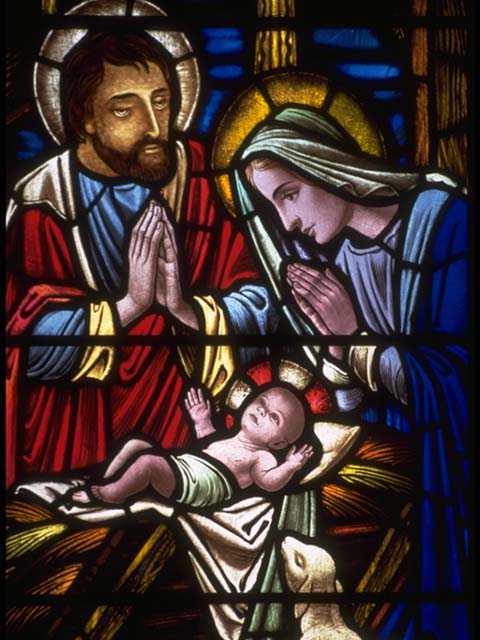
Therefore, I tell myself that today is the perfect day to recall that Jesus suffered more than I have. Jesus endured all sorts of suffering since He was born. Our Saviour was born in a stable that I imagine was not very warm. Jesus’s birth reminds me of my childhood home, a brick house that I suspect was built in 1905. I was born in that house, I suppose, with the help of a midwife. During the winter months, our family tried to warm up the large rooms with old gas heaters that had to be turned off at night to protect the family from a fire, but Jesus didn’t have a space heater when He was born.
And towards the end of His life, Jesus suffered verbal abuse and physical torture. I broke my left foot about nine days ago. I twisted my foot when I fell on the hardwood floor in my bedroom. The pain was excruciating, but I am sure that it did not compare to the pain that Jesus suffered on the way to His final destination, been nailed to a wooden cross. I can only imagine how that must have felt. Today we celebrate his birthday, but we must remember that He chose to be born, even though He knew what was going to happen to Him. Why did he do this? The answer is simple. He loves us. And He will always be doing things for us if we just learn to love Him. So, don’t forget to thank Him for all that He has done for us. Merry Christmas!
Dear Readers: Today I will talk about the Blessed Virgin Mary and the places where she graced us with her presence: Rue de Bac in Paris in 1830 (the Miraculous Medal), La Salette in 1846 and Lourdes in 1858; Pontmain, France (1871), Knock, Ireland (1879), Fatima, Portugal (1917), Beauraing, Belgium (1932), Banneux, Belgium (1933), and in 1531 Our Lady of Guadalupe appeared four times to a humble Native Indian, Juan Diego, on Tepeyac Hill.
Most of you know that I was raised a Roman Catholic. So, today is a very special day. Christ’s mother is looking at me from Heaven as I beg her to perform some special miracles: cure my sister who has Alzheimer’s, protect my dear husband from any illness (He has been taking care of my sister, me, Marty, our cat, and Twister, our foxhound). It is a yearly custom to greet the Virgin at St. Patrick’s Cathedral early in the morning with the mariachi, the Virgin’s fans, and parishioners singing “Las Mañanitas.” This morning was too chilly for me. My fibromyalgia pain intensified. I asked the Blessed Virgin to heal me and other folks who have this dreadful disease. I also asked her to cure my spinal column pain. I need to be well to take care of my family.
Shrine of Our Lady of Guadalupe
There are several facts that I didn’t know about the Virgin of Guadalupe, so I am including them in this blog.
“The lady from Heaven”
Did you know?
Our Lady of Guadalupe appeared to Saint Juan Diego on December 9, 10 and 12, 1531.
The image left on Saint Juan Diego’s tilma is the only true picture of Our Lady of Guadalupe in existence.
The image has remained intact with all its original vibrancy for 475 years. The natural life span of a cloak made with fiber from the gave or maguey plant is only about 30 years.
The image is a pictograph which could be read and understood by the Aztec Indians.
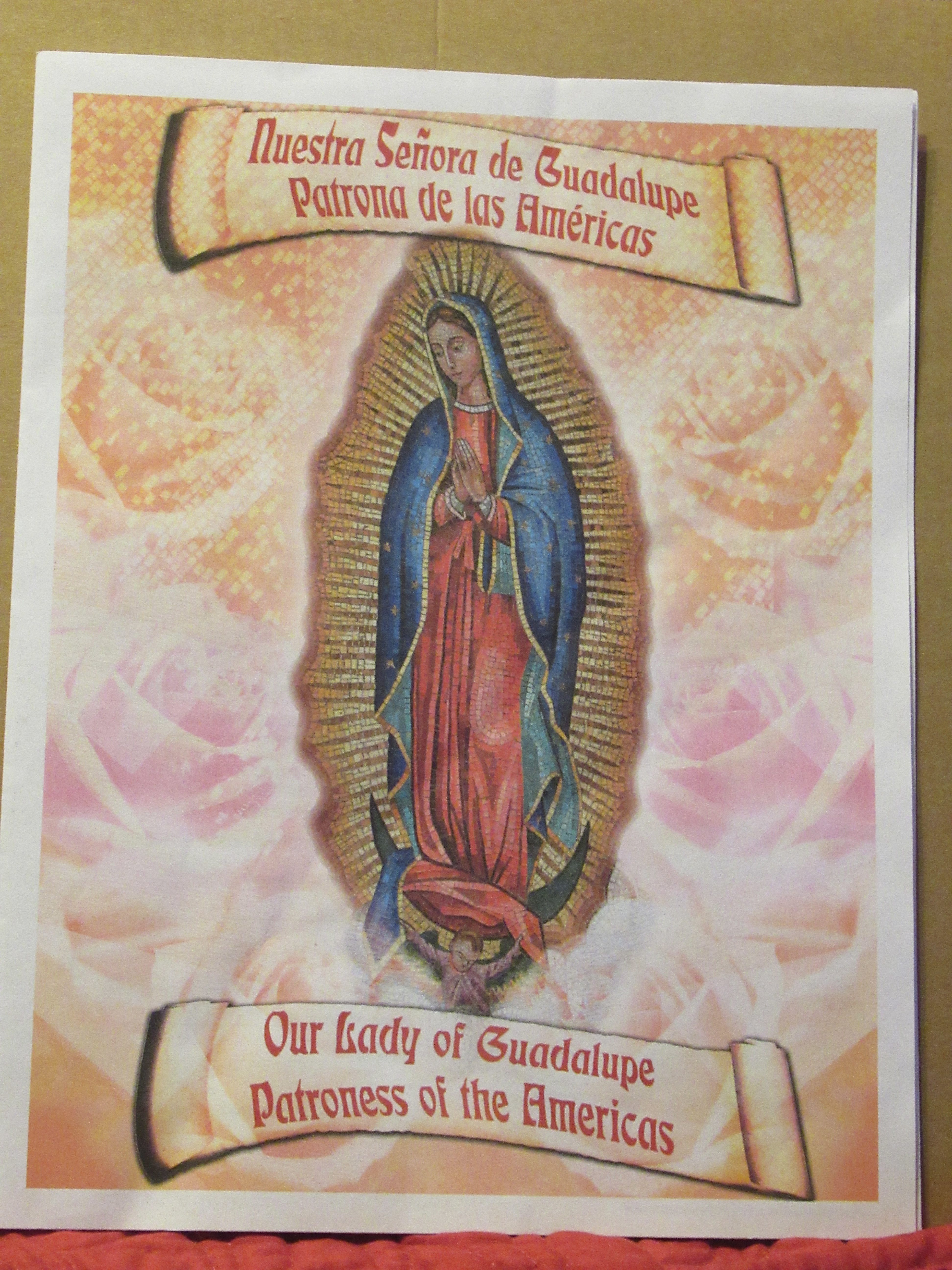
Our Lady appears as a beautiful young Indian maiden and Queen.
Her eyes are looking down with humility and compassion. She is human, not God.
She is wearing a blue-green mantle (the color worn by royalty) covered with stars.
The stars signify she comes from heaven – the Queen of Heaven. The constellations are in the exact position as appeared before dawn on the morning of December 12, 1531.
Her robe is colored rose or pale red and covered with Aztec flowers, symbolic of an Aztec princess.
In the center of her robe, overlying her womb, is a four petal quincunx flower in the shape of a cross which is the sign of the Divine and the center of the cosmic order to the Aztec. The Virgin’s Baby, Jesus, is Divine and the new center of the universe.
Her hands are joined in prayer and, therefore, she is not God but clearly there is one greater than she and she points her finger to the cross on her brooch.
Her fur cuffs symbolize royalty.
She wears a black maternity band signifying she is with Child.
A black cross is on the brooch around her neck. This signifies she is a follower of the God of the Spanish Missionaries, Jesus Christ who died on the cross for all.
She stands in front of the sun. The sun symbolizes the greatest Aztec god – Huitzilopochtli. She announces the God who is greater than their sun god.
She stands on the moon. The crescent moon symbolized the Aztec god Quetzalcoatl, the feathered serpent moon god. She has clearly crushed and defeated him.
An angel with eagle’s wings supports the Mother of God. The eagle was the “bird of the sun.” Here the eagle is the servant of the Virgin. She holds her mantle in one hand and robe with the other, signifying the Son she bears is from both heaven and earth.
To date the image cannot be explained by science.
The image on the tilma was able to do what up to that time the missionaries were not able to do significantly. Namely, clearly explain Christianity to the Indian people. The proof is in the fact that after the apparitions, eight million natives of Mexico converted to Catholicism from 1531 to 1538.
Guadalupan Expert: Msgr. Eduardo Chávez Sánchez
Msgr. Eduardo Chávez Sánchez is co-founder and rector of the Institute for Guadalupan Studies, and is a canon of the Basilica of Guadalupe. Born in Mexico City, he studied philosophy and theology in the Institute for Ecclesiastical Studies at Mexico’s Conciliar Seminary. He was ordained on Aug. 15, 1981, in the Archdiocese of Mexico. He holds a diploma in philosophy from the Universidad del Valle de Atemajac in Guadalajara and, a doctorate in Church history from the Pontifical Gregorian University.https://videos.sproutvideo.com/embed/d39dd9bb131ae5c65a/16dcbacb7a14eb41https://videos.sproutvideo.com/embed/449dd9bb131bedc4cd/00a9862158a9924b
Dear Readers: Have a wonderful day! Don’t forget to thank Our Lady of Guadalupe for all the things she has done for you, even though you may not know it.
Dear Readers, the following information is taken from the Navy History and Heritage Command.
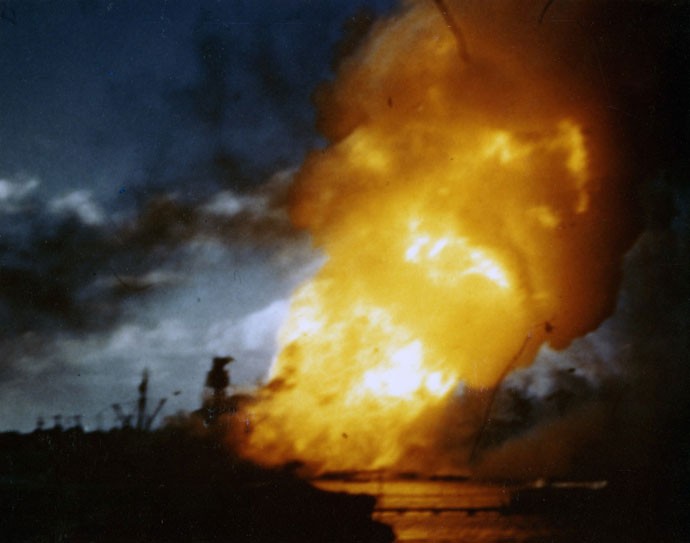
USS Arizona (BB-39) ablaze, immediately following the explosion of her forward magazines, 7 December 1941. Frame clipped from a color motion picture taken from onboard USS Solace (AH-5) (80-G-K-13512).
World War II came to the United States of America on Sunday morning, 7 December 1941, with a massive surprise attack by the Imperial Japanese Navy. “Like a thunderclap from a clear sky,” Japanese carrier attack planes (in both torpedo and high-level bombing roles) and bombers, supported by fighters, numbering 353 aircraft from six aircraft carriers, attacked the U.S. Pacific Fleet at Pearl Harbor in two waves, as well as nearby naval and military airfields and bases. The enemy sank five battleships and damaged three; and sank a gunnery training ship and three destroyers, damaged a heavy cruiser, three light cruisers, two destroyers, two seaplane tenders, two repair ships and a destroyer tender. Navy, Army, and Marine Corps facilities suffered varying degrees of damage, while 188 Navy, Marine Corps, and U.S. Army Air Force planes were destroyed. Casualties amounted to: killed or missing: Navy, 2,008; Marine Corps, 109; Army, 218; civilian, 68; and wounded: Navy, 710; Marine Corps, 69; Army, 364; civilian, 35. Japanese losses amounted to fewer than 100 men and 29 planes.Sailors, Marines, and Soldiers fought back with extraordinary courage, often at the sacrifice of their own lives. Those without weapons to fight took great risk to save wounded comrades and to save their ships. Pilots took off to engage Japanese aircraft despite the overwhelming odds. Countless acts of valor went unrecorded, as many witnesses died in the attack. Fifteen U.S. Navy personnel were awarded the Medal of Honor — ranging from seaman to rear admiral — for acts of courage above and beyond the call of duty, ten of them posthumously.
Japanese forces were astonished at the quick reaction and intensity of U.S. antiaircraft fire. That more Japanese aircraft were not shot down had nothing to do with the skill, training, or bravery of our Sailors and other servicemembers. Rather, U.S. antiaircraft weapons were inadequate in number and capability, for not only had the Japanese achieved tactical surprise, they achieved technological surprise with aircraft and weapons far better than anticipated — a lesson in the danger of underestimating the enemy that resonates to this day.
While damage to the U.S. Pacific Fleet’s battleline proved extensive, it was not complete. The attack failed to damage any American aircraft carriers, which had been providentially absent from the harbor. Our aircraft carriers, along with supporting cruisers and destroyers and fleet oilers, proved crucial in the coming months. The Japanese focus on ships and planes spared our fuel tank farms, naval yard repair facilities, and the submarine base, all of which proved vital for the tactical operations that originated at Pearl Harbor in the ensuing months and played a key role in the Allied victory. American technological skill raised and repaired all but three of the ships sunk or damaged at Pearl Harbor. Most importantly, the shock and anger that Americans felt in the wake of the attack on Pearl Harbor united the nation and was translated into a collective commitment to victory in World War II.
Remembrance Resources Resources for Pearl Harbor remembrance events may be found in our Pearl Harbor Remembrance section.
Why Pearl Harbor? In the video sound bite below, Naval History and Heritage Command historian Robert J. Cressman discusses Japan’s strategic objective for the attack on Pearl Harbor.
Click the links below for additional sets of video sound bites to hear Cressman answer questions about other aspects of the attack. Videos may be downloaded from DVIDS.
The Navy Department Library Online Reading Room contains an overview of the Pearl Harbor attack; that page also provides most of the links given above. Published: Fri Dec 03 15:42:15 EST 2021. Please pray for the brave armed forces who helped us win the war! Thank you to the men and women who served their country under such horrible conditions.

 M. E. Murray
You must be logged in to post a comment.