Our Lady of Guadalupe’s Feast Day

Our Lady of Guadalupe/memurray.com/wordpress.com
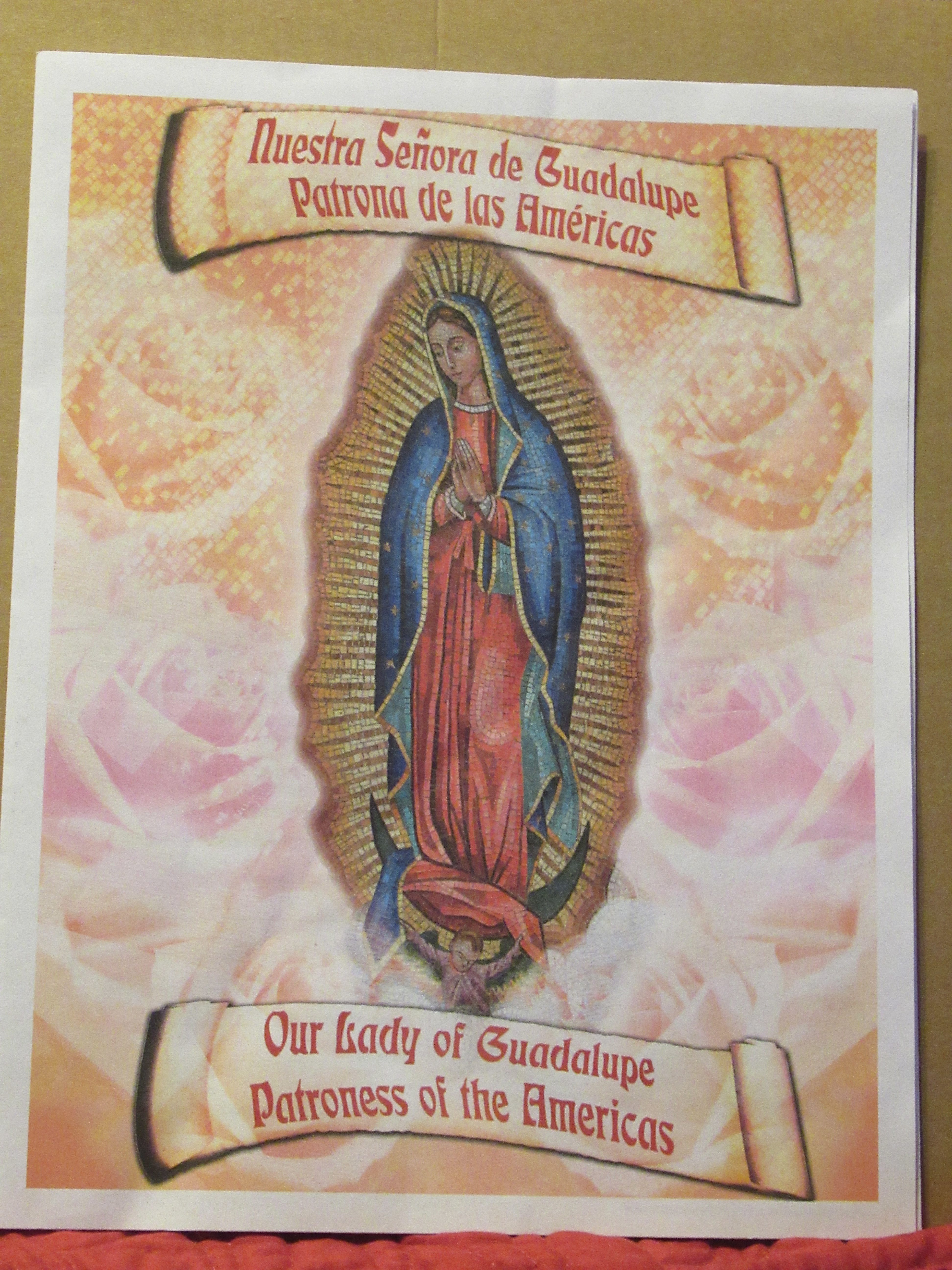
Our Lady of Guadalupe

Dear Readers: Today I will talk about the Blessed Virgin Mary and the places where she graced us with her presence: Rue de Bac in Paris in 1830 (the Miraculous Medal), La Salette in 1846 and Lourdes in 1858; Pontmain, France (1871), Knock, Ireland (1879), Fatima, Portugal (1917), Beauraing, Belgium (1932), Banneux, Belgium (1933), and in 1531 Our Lady of Guadalupe appeared four times to a humble Native Indian, Juan Diego, on Tepeyac Hill.

Most of you know that I was raised a Roman Catholic. So, today is a very special day. Christ’s mother is looking at me from Heaven as I beg her to perform some special miracles: cure my sister who has Alzheimer’s, protect my dear husband from any illness (He has been taking care of my sister, me, Marty, our cat, and Twister, our foxhound). It is a yearly custom to greet the Virgin at St. Patrick’s Cathedral early in the morning with the mariachi, the Virgin’s fans, and parishioners singing “Las Mañanitas.” This morning was too chilly for me. My fibromyalgia pain intensified. I asked the Blessed Virgin to heal me and other folks who have this dreadful disease. I also asked her to cure my spinal column pain. I need to be well to take care of my family.

Shrine of Our Lady of Guadalupe

There are several facts that I didn’t know about the Virgin of Guadalupe, so I am including them in this blog.

“The lady from Heaven”

Did you know?

  • Our Lady of Guadalupe appeared to Saint Juan Diego on December 9, 10 and 12, 1531.
  • The image left on Saint Juan Diego’s tilma is the only true picture of Our Lady of Guadalupe in existence.
  • The image has remained intact with all its original vibrancy for 475 years. The natural life span of a cloak made with fiber from the gave or maguey plant is only about 30 years.
  • The image is a pictograph which could be read and understood by the Aztec Indians.
  • Our Lady appears as a beautiful young Indian maiden and Queen.
  • Her eyes are looking down with humility and compassion. She is human, not God.
  • She is wearing a blue-green mantle (the color worn by royalty) covered with stars.
  • The stars signify she comes from heaven – the Queen of Heaven. The constellations are in the exact position as appeared before dawn on the morning of December 12, 1531.
  • Her robe is colored rose or pale red and covered with Aztec flowers, symbolic of an Aztec princess.
  • In the center of her robe, overlying her womb, is a four petal quincunx flower in the shape of a cross which is the sign of the Divine and the center of the cosmic order to the Aztec. The Virgin’s Baby, Jesus, is Divine and the new center of the universe.
  • Her hands are joined in prayer and, therefore, she is not God but clearly there is one greater than she and she points her finger to the cross on her brooch.
  • Her fur cuffs symbolize royalty.
  • She wears a black maternity band signifying she is with Child.
  • A black cross is on the brooch around her neck. This signifies she is a follower of the God of the Spanish Missionaries, Jesus Christ who died on the cross for all.
  • She stands in front of the sun. The sun symbolizes the greatest Aztec god – Huitzilopochtli. She announces the God who is greater than their sun god.
  • She stands on the moon. The crescent moon symbolized the Aztec god Quetzalcoatl, the feathered serpent moon god. She has clearly crushed and defeated him.
  • An angel with eagle’s wings supports the Mother of God. The eagle was the “bird of the sun.” Here the eagle is the servant of the Virgin. She holds her mantle in one hand and robe with the other, signifying the Son she bears is from both heaven and earth.
  • To date the image cannot be explained by science.
  • The image on the tilma was able to do what up to that time the missionaries were not able to do significantly. Namely, clearly explain Christianity to the Indian people. The proof is in the fact that after the apparitions, eight million natives of Mexico converted to Catholicism from 1531 to 1538.

Guadalupan Expert: Msgr. Eduardo Chávez Sánchez

Msgr. Eduardo Chávez Sánchez is co-founder and rector of the Institute for Guadalupan Studies, and is a canon of the Basilica of Guadalupe. Born in Mexico City, he studied philosophy and theology in the Institute for Ecclesiastical Studies at Mexico’s Conciliar Seminary. He was ordained on Aug. 15, 1981, in the Archdiocese of Mexico. He holds a diploma in philosophy from the Universidad del Valle de Atemajac in Guadalajara and, a doctorate in Church history from the Pontifical Gregorian University.https://videos.sproutvideo.com/embed/d39dd9bb131ae5c65a/16dcbacb7a14eb41https://videos.sproutvideo.com/embed/449dd9bb131bedc4cd/00a9862158a9924b

OLG Description

DOWNLOAD PDF

Dear Readers: Have a wonderful day! Don’t forget to thank Our Lady of Guadalupe for all the things she has done for you, even though you may not know it.

Feast of The “Assumption”

Antique shuttle decorated with a figure of the Blessed Virgin

Covid-19 and fibromyalgia brought my antique and collectible searching to a screeching stop. Among the few collectibles that I have, I own an antique shuttle weaving needle. My husband bought it for me a few years ago because he knows how much I love the Blessed Virgin, Jesus Christ, and all the saints. They have helped me in so many ways, and I treasure the shuttle. It is special. A person, probably a devout Catholic, decorated it with a figure of the Blessed Virgin, nestled it in fine fabric, and attached flowers to its ends. (Here’s a different view of my shuttle.)

Blessed Virgin Nestled in an Antique Shuttle

August 15, Christians and Roman Catholics celebrate a holy day of obligation commemorating the belief that the Blessed Virgin Mary was assumed body and soul into Heaven after she died. If you would like to read more about this holy day, click here.

Happy Easter Sunday

Chick and an Egg

Happy Easter! Today Christians celebrate the resurrection of Jesus Christ and His suffering to save us from our sins.

Have a wonderful day, and don’t forget to thank and pray for all the kind folks who are working around the clock to help people survive the Covid-19 Pandemic.

Good Friday

Two Trees Surrounded by Grass and Wildflowers

Dear readers, due to the coronavirus pandemic, we have been experiencing very difficult times, but I hope that this peaceful picture, one of my favorites, provides some comfort.

Initially, I had posted a picture of Christ’s crucifixion since today is Good Friday, but the picture reminded me of how much He suffered. I can’t imagine how the Blessed Virgin Mary must have felt to see her son being tortured mercilessly. I wouldn’t have had the courage to do what she did. She probably knew what His future entailed; yet, she courageously supported her son throughout his suffering and final death on the cross.

Dear Jesus, thank you for saving us from our sins, and kudos to you for proving to agnostics that You were the son of God when You resurrected on the third day after your death.

On this special day, Good Friday, I ask you to encourage humanity to follow Covid-19 guidelines, so our medical community will not have such a hard time treating folks who have contracted the virus. Also, I pray that You help our scientists develop a Covid-19 vaccine so we may win this awful battle against this virus. Lastly, please help us control global warming so we may preserve the beautiful world You created for us.

Holy Week Begins today.

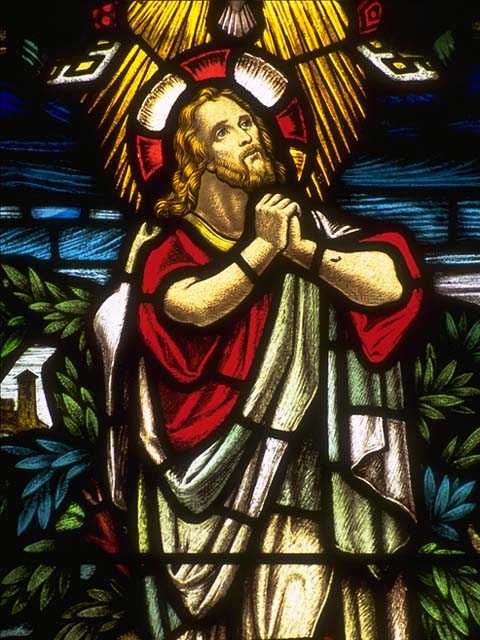
Jesus Praying to his Father at the Garden of Gethsemane

Palm Sunday, the last Sunday of Lent, marks the beginning of Holy Week and Jesus Christ’s triumphant entrance to Jerusalem where He was greeted by people carrying palm fronds; only to be crucified later by the same people who welcomed Him.

Palm Sunday is a time to reflect on God’s love for us. He sent us his only begotten son to save us from ourselves. Jesus suffered immensely. After His terrible death on the cross, He resurrected three days later. That action proved Jesus was the son of God.

Easter Sunday is a reminder that God loves me, and has always been by my side, especially through tough times. Today, and every day, I thank Jesus for loving me, my husband, relatives, pets, and friends.

Today is Ash Wednesday

Violet Iris

Ash Wednesday marks the beginning of the Lent which lasts for 40 days of prayer and fasting. Many Christians, especially Catholics, observe the day by going to church to receive ashes prepared from the blessed palms used during the previous year’s Palm Sunday. The priest makes the sign of the cross on our foreheads with the ashes and says “Dust thou art, and into dust thou shalt return.” This expression tells me that I’m on earth as a favor from God, and that I should use my time wisely.

My mother was a devout Catholic. She went to church frequently, and observed holy days of obligation, including Ash Wednesday. On this blessed day, my sister and I would go to church with Mom to receive the ashes.

This holy day reminds me of the special times that I spent with my family, and it particularly reminds me that Jesus Christ suffered and died on the cross to save mankind.

Happy Valentine’s Day

Happy Valentine’s Day

Dear Readers, I thought you might enjoy reading the following article about Valentine’s day.

History of St. Valentine

  • FR. WILLIAM SAUNDERS

Who was Saint Valentine and how did he come to inspire Valentine’s Day?

aavalentine.jpg
St. Valentine

In the early martyrologies, three different St. Valentines are mentioned, all sharing Feb. 14 for a feast day. Unfortunately, the historical record is sparse. The first St. Valentine was a priest and physician in Rome. He along with St. Marius and his family comforted the martyrs during the persecution of Emperor Claudius II, the Goth. Eventually, St. Valentine was also arrested, condemned to death for his faith, beaten with clubs, and finally beheaded on Feb. 14, AD 270. He was buried on the Flaminian Way. Later, Pope Julius I (333-356) built a basilica at the site which preserved St. Valentine’s tomb. Archeological digs in the 1500s and 1800s have found evidence of the tomb of St. Valentine. However, in the thirteenth century, his relics were transferred to the Church of Saint Praxedes near the Basilica of St. Mary Major, where they remain today. Also, a small church was built near the Flaminian Gate of Rome which is now known as the Porta del Popolo but was called in the 12th century “the Gate of St. Valentine,” as noted by the early British historian William Somerset (also known as William of Malmesbury, d. 1143), who ranks after St. Bede in authority.

The second St. Valentine was the Bishop of Interamna (now Terni, located about 60 miles from Rome). Under the orders of Prefect Placidus, he too was arrested, scourged, and decapitated, again suffering persecution during the time of Emperor Claudius II.

The third St. Valentine suffered martyrdom in Africa with several companions. However, nothing further is known about this saint. In all, these men, each named St. Valentine, showed heroic love for the Lord and His Church.

The popular customs of showing love and affection on St. Valentine’s Day is almost a coincidence with the feast day of the saint: During the Medieval Age, a common belief in England and France was that birds began to pair on Feb.14, “half-way through the second month of the year.” Chaucer wrote in his “Parliament of Foules” (in Old English): “For this was on Seynt Valentyne’s day, When every foul cometh ther to choose his mate.” For this reason, the day was dedicated to “lovers” and prompted the sending of letters, gifts, or other signs of affection.

Another literary example of St. Valentine’s Day remembrances is found in Dame Elizabeth Brews “Paston Letters” (1477), where she writes to the suitor, John Paston, of her daughter, Margery: “And, cousin mine, upon Monday is St. Valentine’s day and every bird chooseth himself a mate, and if it like you to come on Thursday night, and make provision that you may abide till then, I trust to God that ye shall speak to my husband and I shall pray that we may bring the matter to a conclusion.” In turn, Margery wrote to John: “Unto my right well beloved Valentine John Paston, Squyer, be this bill delivered. Right reverend and worshipful and my right well beloved Valentine, I recommend me unto you, full heartily desiring to hear of your welfare, which I beseech Almighty God long for to preserve until His pleasure and your heart’s desire.” While speaking of the amorous flavor of Valentine’s Day, no mention is made of the saint.

While it seems that the exchange of “valentines” is more the result of secular custom rather than the memory of St. Valentine, and that the celebration has been further paganized with cupids and the like, there is a Christian message that should be remembered. The love of our Lord, depicted beautifully in the image of His most Sacred Heart, is a sacrificial, self-less, and unconditional love. Such is the love that each Christian is called to express in his own life, for God and neighbor. Clearly, St. Valentine no matter which one showed such a love, bearing witness to the faith in his dedication as a priest and in the offering of his own life in martyrdom. On this Valentine’s day, looking to the example of this great saint, each person should offer again his love to the Lord, for only by doing so can he properly love those who are entrusted to his care and any other neighbor. Each person should again pledge his love to those loved ones, praying for their intentions, promising fidelity to them, and thanking them for their love in return. Never forget Jesus said, “This is my commandment: love one another as I have loved you. There is no greater love than this: to lay down one’s life for one’s friends” (Jn 15:12-13). St. Valentine fulfilled this command, and may we do the same.

Acknowledgement

Saunders, Rev. William. “History of Saint Valentine.” Arlington Catholic Herald.

This article is reprinted with permission from Arlington Catholic Herald.

The Author

saunders1saundersFather William Saunders is pastor of Our Lady of Hope parish in Potomac Falls, Virginia. He is dean of the Notre Dame Graduate School of Christendom College. The above article is a “Straight Answers” column he wrote for the Arlington Catholic Herald. Father Saunders is the author of Straight Answers, a book based on 100 of his columns, and Straight Answers II.Copyright © 2003 Arlington Catholic Herald.

Feast of the Wise Men

Parade is the source of the following information, written by Yvette Marquez.

What Is Día de Los Reyes (Three Kings’ Day)? And How Do You Celebrate It? 

SEPTEMBER 24, 2019 – 12:00 PM  – 6 COMMENTS465

Yvette Marquez

By YVETTE MARQUEZ 

rosca-de-reyes-kings-cake-ftr

In Mexico, Día de Los Reyes (known elsewhere as Epiphany) is celebrated on January 6 to honor the Three Wise Men. This holiday represents the day the Three Wise Men gave gifts to Jesus Christ, and the day closes the Christmas festivities. It’s also the day the people of Mexico exchange gifts!

What is Three Kings’ Day?

During Día de Los Reyes, Mexicans serve Rosca de Reyes, or King’s Cake. “Rosca” means wreath and “reyes” means kings. The Rosca de Reyes has an oval shape to symbolize a crown and has a small doll inside, which represents baby Jesus. The doll figure symbolizes the hiding of the infant Jesus from King Herod’s troops. Traditionally, roscas are adorned with dried and candied fruits to symbolize the many jewels that a crown would have. The person who gets the slice with the doll must host a party on Día de la Candelaria in February.

Related: 24 Food Gifts Teachers, Neighbors & Family Members Will Love 

What happens on Three Kings’ Day?

Christmas might be over, but it doesn’t mean the gift giving (and receiving) is over. Children in Latin America and Spain receive the majority of their gifts from the Three Kings, rather than from Santa Claus at Christmas. Before going to bed, the children place their old shoes with a wish list on top for the Three Kings. In the morning, the shoes are filled with toys and gifts from the Three Kings.

Reyes festivities are celebrated in a variety of ways across the globe, and here are five ways you can celebrate the traditions in your home.

How to celebrate Three Kings’ Day

My First Rosca de Reyes: Do you want to try making a rosca de reyes? Read my experience making my first rosca with my children along with a delicious recipe. Remember… The custom is that whoever finds the doll must host a party on Candlemas (February 2nd).

Palm Sunday

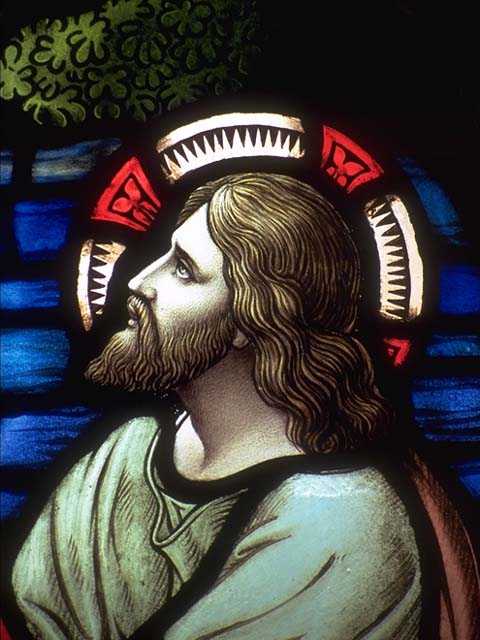
jesuschurchwindow/memurray.com/wordpress.com

Palm Sunday, the last Sunday of Lent, marks the beginning of Holy Week and the Lord’s triumphant entrance to Jerusalem where He was greeted by people carrying Palm fronds; only to be crucified later by the same people who welcomed Him.

Palm Sunday is a time to reflect on God’s love for us. He sent us his only begotten son to save us from ourselves. Jesus suffered immensely. After His terrible death on the cross, He resurrected three days later. That action proved Jesus indeed was the son of God.

I look forward to Easter Sunday. It is a reminder that God loves me, and has always been by my side, especially through tough times. Today, and every day, I thank Jesus for loving me, my husband, relatives, pets, and friends.

Ash Wednesday

Crucifixion/www.memurray.com/www.comWordPress.com

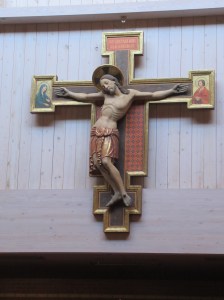
Crucifixion of Jesus Christ

Today is Ash Wednesday. Many Christians participate in this religious ceremony, and I was fortunate to attend today’s ceremony at St Peter, the Apostle, Catholic Church.

What Ash Wednesday means to me. Ash Wednesday, like Thanksgiving Day, is another opportunity to officially give thanks to Jesus Christ for tolerating 40 days of fasting; depriving Himself of luxuries; and finally suffering excruciating pain  on the cross to save mankind. Therefore, when I think of how much Jesus Christ did for us, it is not a big deal, for me, to give up something that I like to do during Lent.

Ash Wednesday marks the beginning of the Lenten season which lasts 40 days. The ashes used on Ash Wednesday are made from the burning of palms blessed in the previous year’s Palm Sunday celebration. Also, some churches cover statues and images with purple shrouds during Lent.

The ashes remind me of the words: “Dust thou art, and into dust thou shalt return,” and that eventually, I will die, and that I should use the time I have on earth wisely, in spite of having a debilitating chronic illness. Life is precious. I’m so grateful to be alive.